
 ↗
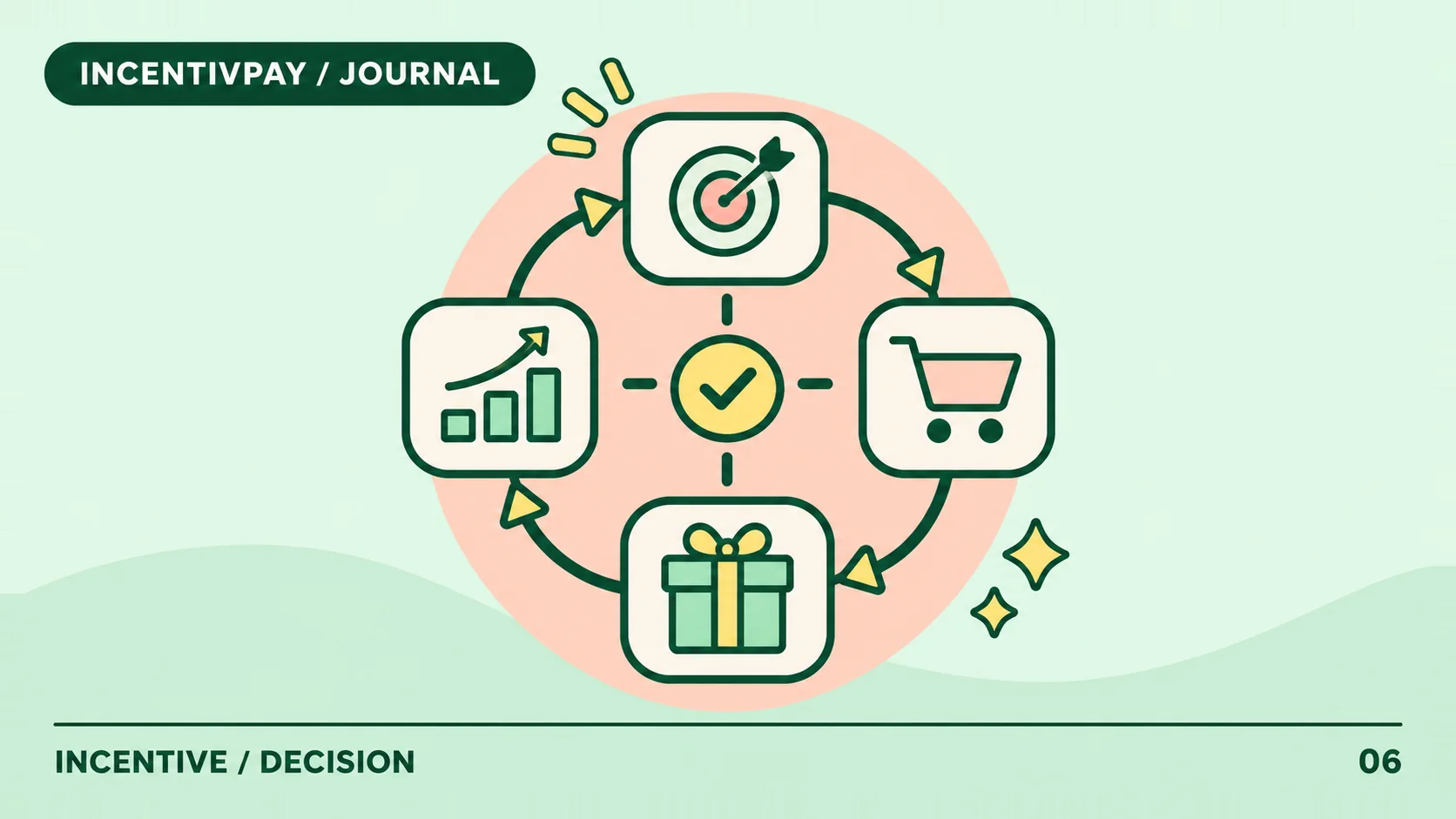
Decide, deliver, verify, prove. A walkthrough of the loop behind an outcome-based incentive.
Most incentive programs start with a budget and a guess. This article from the previous IncentivPay site describes a loop in which a campaign starts as a decision, ends as a measurement, and can be inspected at each step.
1. Decide
Start with the customer state and the merchant goal. Compare possible mechanisms, set a cap, and agree on a measurement plan before launch. A broad discount should be evaluated alongside more focused alternatives.
2. Deliver
The offer has to reach a real customer on a relevant surface: a hosted page, a printed QR code, an eligible checkout placement, or a message. Each route needs clear participation and delivery terms.
3. Observe the action and settle the benefit
Define the qualifying purchase or visit, the named event and the official result source. The campaign also specifies the main benefit and a smaller fallback when the main event condition is not met. Both obligations are budgeted in advance.
4. Prove
Compare eligible behavior against a suitable baseline or holdout. Track the cost of delivered benefits and look at business outcomes such as repeat visits or contribution margin. If an offer does not help, change it or retire it.
Why the loop matters
A single promotion can get lucky. A repeatable planning and measurement loop gives a business a better basis for its next campaign. This is a conceptual framework from the previous site, not a statement that every feature described there is available today.